
Interest Rates on Hold
Listed Under: News
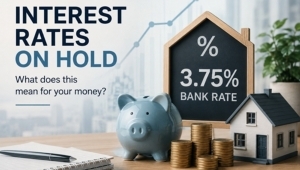
Interest Rates on Hold: What Does This Mean for Your Money?
The Bank of England has kept its base interest rate at 3.75%, where it has remained since December 2025.
For some time, much of the discussion around interest rates has focused on when they might fall further. However, the outlook has become less certain as inflationary pressures have started to increase again.
UK inflation rose to 2.9% in July, up from 2.6% in June and above the Bank of England's 2% target. Higher energy costs have contributed to the increase, and inflation is expected to remain above target in the coming months.
So, what could this mean for your finances?
Good news for savers, for now
Higher interest rates can be welcome news for people holding money in cash, with savings accounts continuing to offer more attractive rates than we saw for much of the previous decade.
However, it remains important to regularly review the interest being paid on your cash savings. Banks and building societies set their own rates and an account that was competitive when it was opened may not remain so.
Inflation should also be considered. If the interest earned on savings does not keep pace with rising prices, the real purchasing power of your money can still reduce over time.
What about mortgages and borrowing?
For borrowers, the picture is less positive.
Bank Rate influences the rates available on mortgages and other borrowing, although lenders also take a range of other factors into account when setting their rates.
Those approaching the end of a fixed-rate mortgage may therefore find borrowing costs remain higher than they had hoped, particularly if they were expecting significant interest rate reductions during 2026.
Should you keep more money in cash?
Attractive savings rates can make holding cash feel particularly appealing. Cash is an important part of financial planning, especially for emergency funds and money that may be required in the short term.
However, keeping too much in cash over longer periods can carry its own risks.
Inflation can gradually reduce its purchasing power, while longer-term investments have the potential to provide capital growth and income, although their value can fall as well as rise.
The right balance between cash and investments will depend on your circumstances, objectives, attitude to risk and when you are likely to need access to your money.
What happens next?
The Bank of England's next interest rate decision is due on 17 September 2026.
While nobody can predict with certainty what will happen to interest rates, current expectations suggest that significant cuts may not arrive as quickly as previously hoped.
For savers, investors and borrowers alike, this is a useful reminder that financial plans shouldn't be based on trying to predict the next interest rate move.
Regularly reviewing your savings, investments and wider financial plan can help ensure your money remains positioned appropriately as economic conditions change.
The value of investments can fall as well as rise and you may not get back the amount originally invested. This article is for general information only and does not constitute financial advice.
 loading...